Fractional finance models are reshaping modern finance. Learn why they’re the next critical layer for flexible, scalable finance systems.
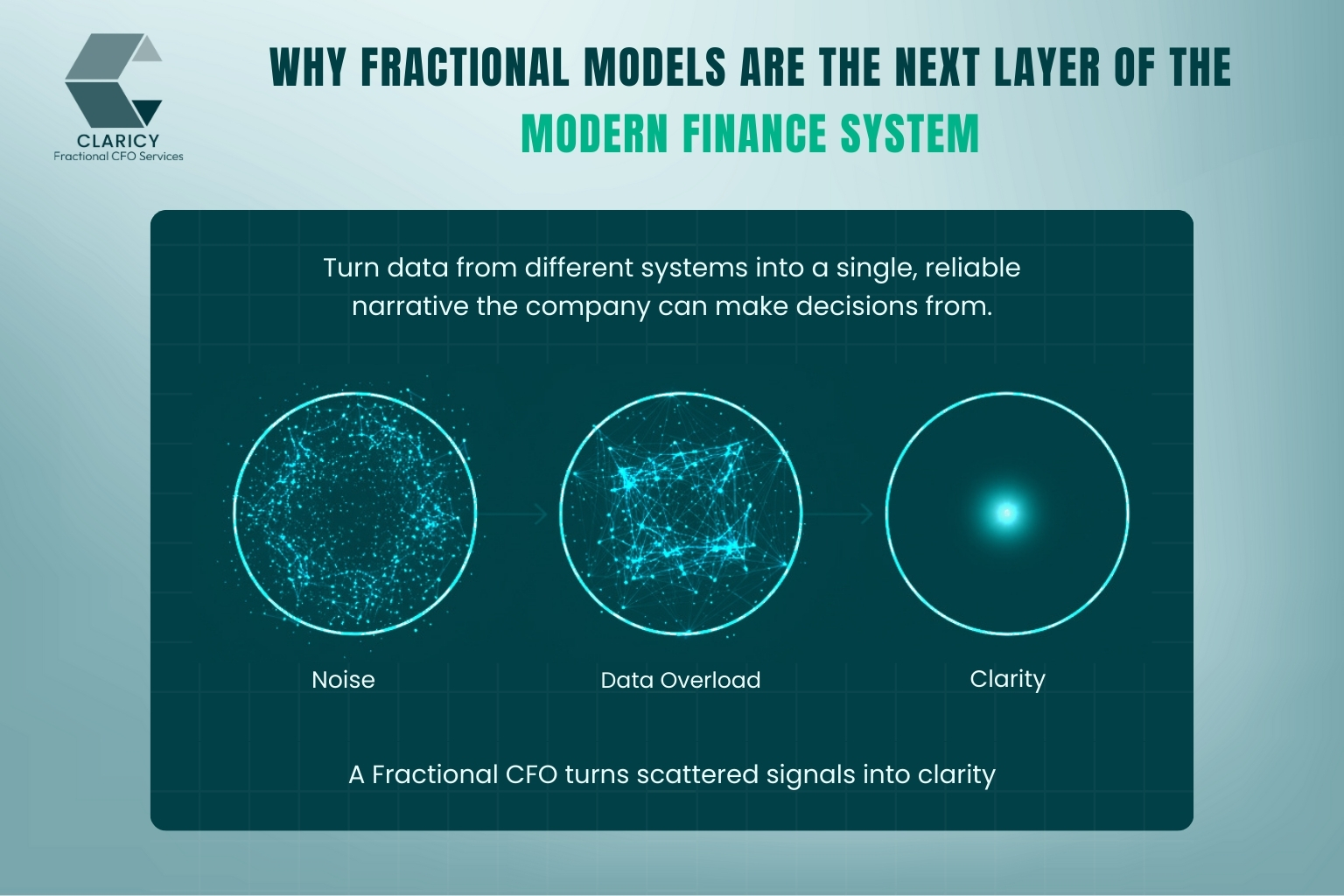
Why Fractional Models Are the Next Layer of the Modern Finance System
"Fractional CFO" still sounds like a trend, but inside growth-stage companies, the reality is structural.
For growing companies, especially those between $2M and $50M, three constraints tend to sur face at the same time:
Senior finance talent is expensive
That talent is scarce
Systems, data, and stakeholders have become more complex than the team can support
Another software subscription won't fix this, and neither will asking one internal generalist to take on the entire finance function.
What does work is building a modern finance system, with fractional roles forming one of its layers.
Most companies eventually reach a point where they have basic accounting, some reporting, a finance manager or strong bookkeeper, and rising expectations from investors and lenders.
Yet no one is responsible for the information supply chain from CRM to billing to cash.
No one owns the coordination layer across sales, delivery, operations, and accounting.
And no one has the time or mandate to turn scattered data into a single, reliable narrative.
That gap between what the business needs and what it can af ford full-time is where fractional models fit.
Used well, fractional isn't a "cheap CFO."
It's a way to:
Apply senior judgment a few days a month Strengthen the coordination function, where teams, tools, and assumptions meet
Sequence investments in tools and roles so the work flow works be fore the software
Translate investor and lender expectations into a practical roadmap
In practice, the value is system design, decision support, and coordination...not the title.
When fractional roles fail, it's usually for predictable reasons:
1. Unicorn expectations. Hired to "own everything" with no clarity on scope or decision rights.
2. Weak foundation. Strategy placed on fragile bookkeeping or inconsistent data.
3. Drive-by strategy. Strong board insights but no presence in the operating cadence.
4. Wrong level. The real need is a controller, systems specialist, or finance manager.
These are design issues, not individual shortcomings.
Fractional only works when it is treated as part of the broader finance architecture.
A better approach is intentional design: anchor core accounting, make the coordination function explicit, de f ine where planning and decision support sit, and then ask:
Which parts of this system genuinely require senior judgment, and for how many days each month?
For many companies, the answer points to a fractional model for a period of time.
Not because it's fashionable, but because it fits the economics, the talent market, and the workload of a modern business.
Used casually, it becomes another buzzword.
Used intentionally, it becomes the next layer of a modern finance system;
One that gives growing companies the senior thinking they need, in a structure they can sustain.


