Move beyond “SMB struggle” narratives by focusing on practical solutions that drive resilience, growth, and real results.
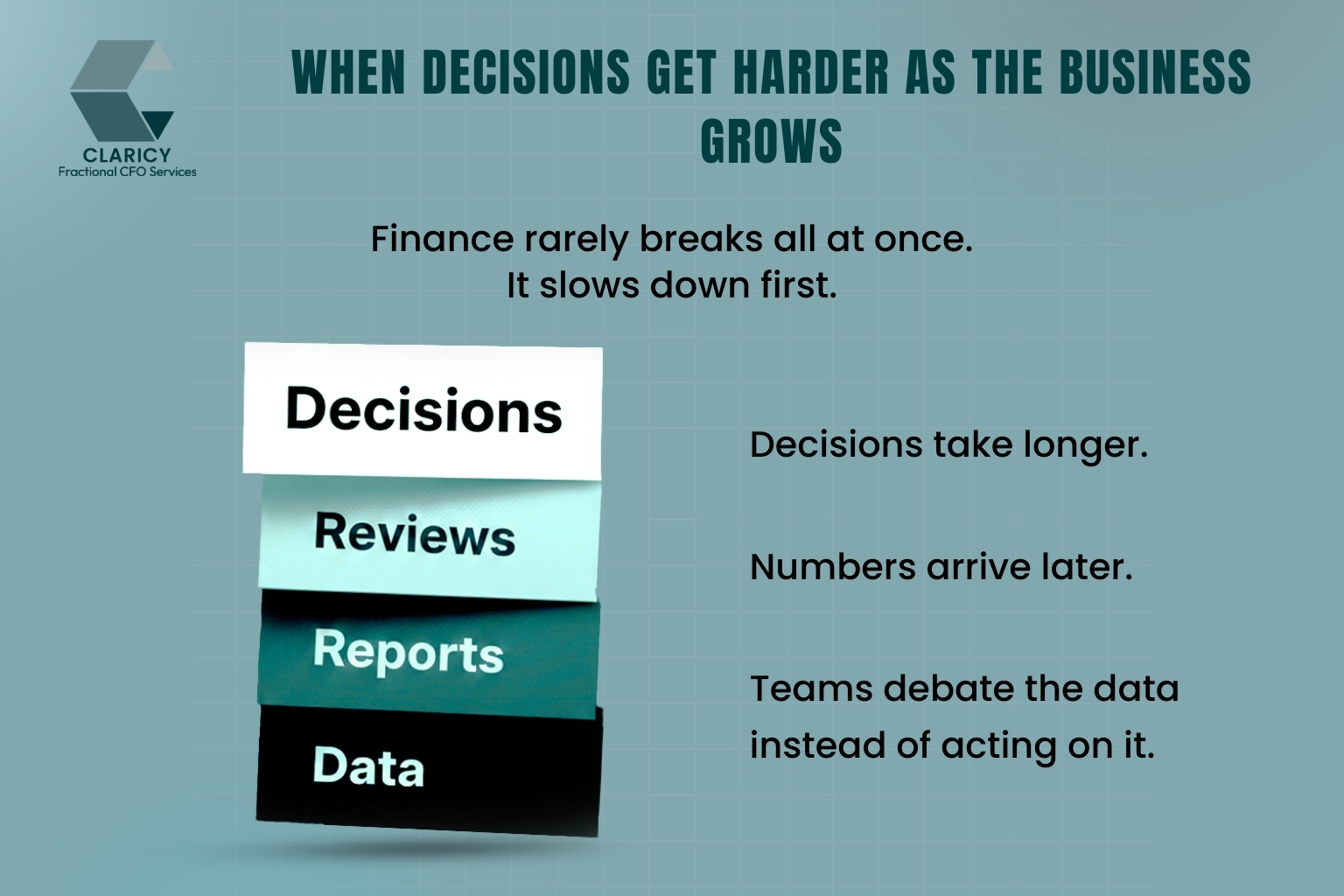
Finance rarely breaks all at once. It slows down first.
Leadership senses friction, but it’s hard to pinpoint where it’s coming from.
This isn’t a people problem. It’s a systems mismatch.
As complexity increases, more customers, more delivery paths, more exceptions,more tools, finance often continues to rely on informal coordination andinherited habits.
The business evolves. The operating system does not.
The result is predictable:
• Information arrives late because inputs arrive late
• Margin conversations stall because definitions aren’t consistent
• Forecasts feel fragile because drivers aren’t stable
• Accountability becomes the complaint because ownership is unclear
Sympathy doesn’t resolve this. Architecture does.
Good finance systems are built from primitives that scale.
The same building blocks that support good decision-making exist in well-runorganizations of every size.
In larger companies, they are usually buried inside process manuals, ERPworkflows, and headcount.
At smaller scales, they need to be made explicit.
These are not small-company shortcuts. They are foundational primitives,designed early, adapted as complexity grows, and eventually embedded in ERPwhen the cost-benefit makes sense.
Here is the repeatable operating pattern:
1) Shared definitions (10–15 max) Revenue. Margin. Backlog or WIP. Churn.Utilization. Cash. If these aren’t consistent, every report becomes a debate.
2) One owner per input stream (not per report) Sales to invoicing handoffsDelivery to time and WIP signals Payroll coding and timing Vendor approvals andrenewals.
3) A weekly “numbers flow” cadence Collections, spend exceptions, headcountchanges, delivery signals. This reduces information latency and removesmonth-end compression.
4) A minimum viable close Bank reconciliations, key balance-sheet checks,documented revenue logic, short variance commentary. Repeatable beats heroic.
5) One monthly decision forum Same pack, every month: cash position, revenueand margin, top variances, capacity constraints. Finance exists to supportdecisions, not reporting theatre.
Together, these create an uninterrupted information supply chain, right-sizedfor the stage of the business, but structurally sound.
AI can accelerate what’s already designed. It cannot fix missing architecture.
Less sympathy. More design.
That’s how financial clarity is engineered.


